
Dewatering for The Big Pipe
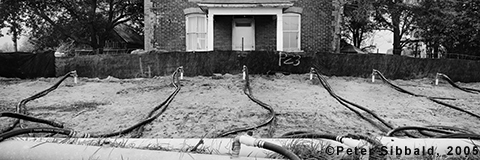
Stouffville, Ontario. Dewatering
Approximately 43°56’57.22″N 79°15’7.87″W, facing East, circa October 2, 2005
From my series: Elegy for a Stolen Land
As part of the extension of York Region’s $350 million mega-project known as the “Big Pipe”, a large sewer trunk passes through land along the 9th Line in front of this 19th century farm house. The land is dewatered so that workers can get deep into the ground, at or below the water table, to install the pipe.
This trunk of the pipe, to accommodate growth in Stouffville’s secondary plan, is to move sewage to the Duffin Creek Water Pollution Control Plant near Lake Ontario. Rates of dewatering range from 5,000 – 30,000 litres per minute, and the project stretches well up into the Oak Ridge’s Moraine, the natural aquatic battery for all lands southward to Lake Ontario.
On January 3, 2004 The Toronto Star’s Leslie Ferenc reported in an article entitled Close -up: The Big Pipe, that opponents, from the province’s environment commissioner right on down to farmers and individual farm owners, argue—and officials readily admit—that dewatering process has proven to empty aquifers, parch resident’s wells, bleed streams and fields dry, destroy fish and wildlife habitats, and draw effluent away from failing septic tanks into the wider water table. Proponents argue that they will be able to set things right later by implementing mitigating measures.
Such mitigating measures are planned on the assumption that such measures may yet be invented and successfully implemented.
This and other of The Star’s stories about the Big Pipe are no longer freely available on the internet, but you can find a copy of this one here. Environmental Defence and Lake Ontario WaterKeeper have archived some of that coverage. Otherwise they can be sourced through The Star’s paid archive service.
… Comin up next, “Following the money…”
